

Spital am Pyhrn


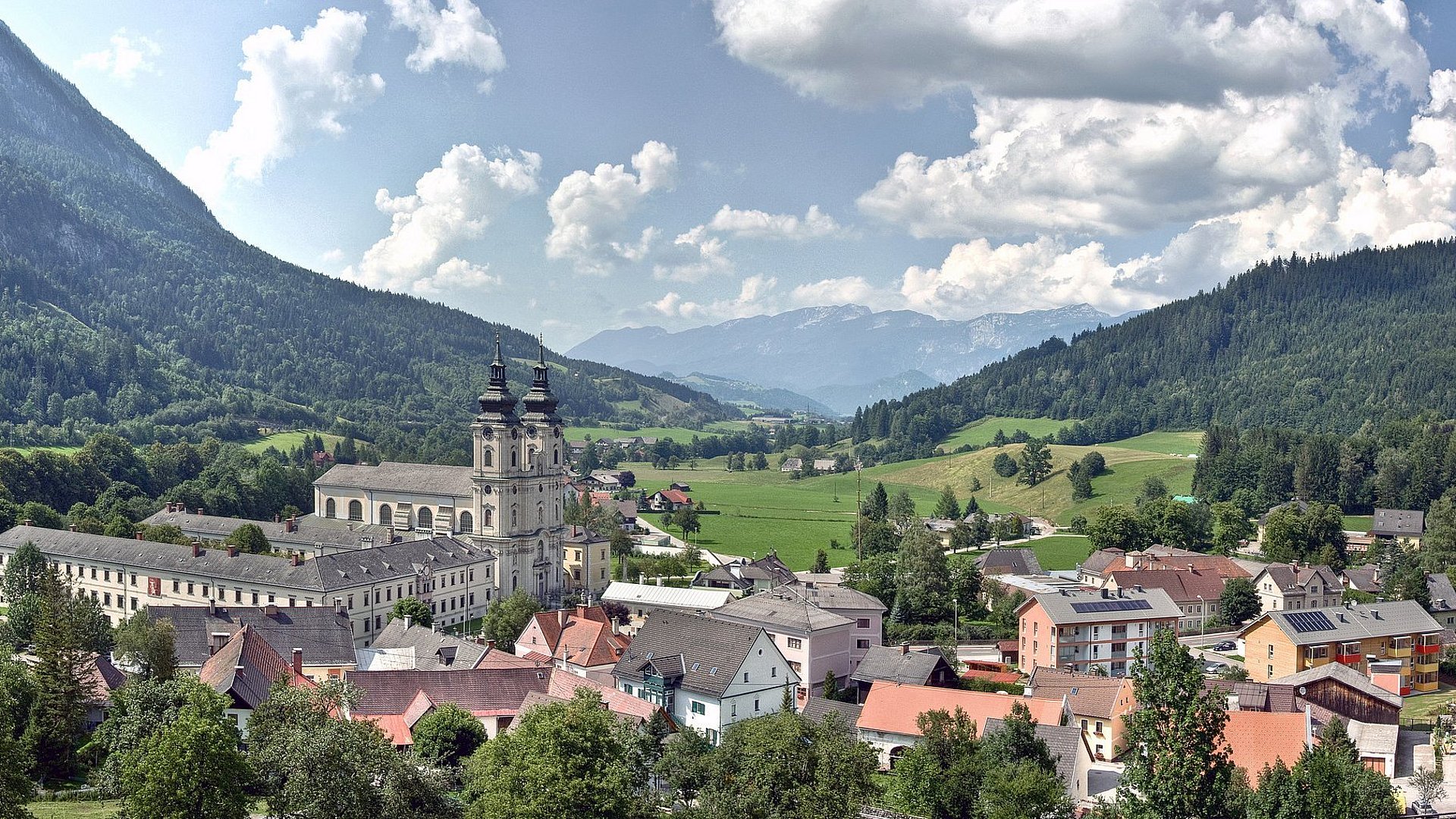
Spital am Pyhrn - village in the mountains between abbey and peaks
Spital am Pyhrn - Mountain world. Nature experience.tradition
Spital am Pyhrn is located in the south of Upper Austria, at the foot of the Pyhrn Pass and on the edge of the Kalkalpen National Park. The village is often referred to as a "village in the mountains" and combines alpine landscape, monastic history and lively everyday culture in a special way. The mountains of the Totes Gebirge open up here, while in the valley a place unfolds that has grown - from hospitality, from trade over the pass and from the power of its nature.
The baroque abbey with the "Dom am Pyhrn", visible from afar, still characterises the townscape today. Guided tours of the church, cultural events and the commitment of the Association for Culture and History bring the history of the former hospice on the Pyhrn Pass to life. Between historic walls and quiet courtyards, it becomes clear: Spital am Pyhrn does not preserve its heritage as a museum, but as part of everyday life.
At the same time, the municipality is a starting point for nature experiences in all directions. The Wurzeralm with the Teichlboden upland moor - the highest upland moor in the northern Limestone Alps - invites you to hike through a landscape that has grown over thousands of years. The Dr Vogelgesang Gorge, described as the longest accessible gorge in Upper Austria, leads through rock and water and shows the power of the mountains at close quarters. This makes a stay in Spital am Pyhrn an encounter with unspoilt nature and alpine expanses.
Spital am Pyhrn is more than just a holiday resort. It is a place where mountains, culture and community come together - authentic, manageable and deeply rooted in the heart of Upper Austria.


Facts & Figures
History of the municipality of Spital am Pyhrn
Spital am Pyhrn owes its origins to the route over the mountains. The Pyhrn Pass was an important north-south connection between the Danube region and the south of the Alps from early on. In order to provide for travellers, pilgrims and traders, a hospital was founded on the Pyhrn around 1190 by the diocese of Bamberg - the nucleus of today's village. This hostel quickly developed into a spiritual and economic centre in the pass region.
The first pilgrims' hostel ("Altspital") was established in the valley as early as the 12th century. In 1418, the hospital was converted into a collegiate monastery - a decisive step for further development. Not only did the monastery's structural presence grow, but also its economic importance: land ownership, tithe rights and its location on an important trade route characterised people's lives for centuries. The village developed from a supply station to an independent settlement with crafts, agriculture and church administration.
In the 17th and 18th centuries, the monastery took on its baroque appearance. Today's parish church - often referred to as the "Dom am Pyhrn" - still bears witness to this heyday. The monastery was abolished in 1807 as part of church reforms, and its monastic use ended shortly afterwards. This marked the beginning of a new phase: Spital am Pyhrn became a political municipality and became increasingly secular.
The infrastructure changed fundamentally in the 19th and early 20th centuries. In 1906, the Pyhrnbahn railway brought the connection to the supra-regional railway network - an important impulse for trade and the beginning of tourism. The development of the Dr Vogelgesang Gorge in the same year shows how nature experiences and summer holidays developed. This was later followed by road construction projects and finally the modern transport connection via the Pyhrnachse.
The 20th century was also characterised by difficult times for the municipality, including the years of National Socialism with a satellite camp of the Mauthausen concentration camp in the village. After 1945, Spital am Pyhrn grew into a tourist and living space between tradition and new beginnings.
Today, Spital am Pyhrn combines its history as a pass, monastery and mountain village with a lively present - grown over centuries at the interface of nature, faith and movement across the Alps.
Interesting facts about the municipality of Spital am Pyhrn in 360° Alpenland
Spital am Pyhrn combines the mountain world between Pyhrn and Priel with a historic town centre around the baroque monastery. Its location on the Pyhrn Pass has made the village a meeting point for travellers for centuries. Today it is the ideal starting point for hiking holidays, winter days on the Wurzeralm and quiet moments on the edge of the Kalkalpen National Park.
From the town centre, paths lead in all directions: through alpine meadows, into the Dr. Vogelgesang Gorge or up to panoramic peaks such as the Great Pyhrgas. Whether a leisurely valley circuit or an alpine mountain tour - Spital am Pyhrn offers hiking in Upper Austria with clear orientation and plenty of nature.
The Wurzeralm is the local mountain area of Spital am Pyhrn. In summer, panoramic hikes and the high moor on Teichlboden beckon, while in winter there are family-friendly pistes and winter hiking trails. The mountain railway takes you up in comfort - the view opens up far into the Alps.
The protected forest wilderness of the Kalkalpen National Park begins just a few minutes away. Ancient beech forests, clear streams and guided ranger tours show how nature is allowed to develop. Ideal for all those who are looking for peace and quiet and want to get to know Upper Austria from its original side.
The former Spital am Pyhrn Abbey still characterises the town today. The baroque collegiate church, concerts and events combine history with the present. Anyone wishing to combine a cultural trip with a nature holiday will find a harmonious setting here.
Short hiking trails, the Wurzeralm, nature experiences such as the gorge and plenty of open space make the village family-friendly. Children experience mountains here not as a challenge, but as an adventure on safe ground.
The gorge is one of the most impressive natural experiences in the region. You follow the water over footbridges and steps through rock and gorge - a path that makes you feel the power and patience of nature.
Spital am Pyhrn is a year-round destination. Summer and autumn are ideal for hiking holidays and nature experiences, winter for skiing and snow tours. Each season shows a different facet of the mountains.